Showing posts with label music. Show all posts

Friday, 25 April 2014

20 Years Ago Today: Parklife Anniversary Review


20 years ago today, on 25 April 1994, my all-time favourite album Parklife was released. It’s the album that became a jewel in the crown of the Britpop movement that Blur had helped to kick start with the release of their second album Modern Life Is Rubbish the previous year. It’s so much more to me though – not only is it my favourite album, it’s also the first album I ever bought.

My music epiphany happened when I watched the Brit Awards in February 1995 and saw Blur clean up winning best band, album, single and video. Not only was the music great but the band looked cool too – I distinctly remember drummer Dave Rowntree having DAVE written on his face as a parody to the SLAVE protest that Prince had across his cheek at the time. I was hooked.

The next Saturday I took the bus into town (20p child fare) and walked into WH Smiths in Ipswich and bought the album on cassette for £10 – all paid with one pound coins that I had being saving up. I’m showing my age with that sentence but I think there’s something quite magical about saving up for something and then going off on an adventure to buy it – clicking ‘buy album’ on iTunes may be easier but it certainly doesn’t have the same charm.

I mainly listened to the first side of the album as that’s where all the singles were; my 14 year old brain wasn’t quite ready to deal with the weirder songs on the second side. At the age of 16 I bought the album on CD, something I’ve done twice since; once because I broke the CD as a result of it being left amongst the chaos of my teenage bedroom floor, and again when I bought the Blur 21 box set 2 years ago. The only format I haven’t owned the album on is vinyl but if I ever saw it for sale on vinyl then I’d definitely buy it – a 12 inch glossy version of the famous album cover would look great on my wall.


Image: The iconic Parklife album cover

I have listened to the album hundreds of times over the last 19 years of my life and I know every lyric and every note off by heart. It’s an album that brings back many fond memories and that has also helped me get through tough times. Song by song, here is my take on the 16 tracks that make up this great album:
1.       Girls & Boys
The stomping album opener and indie disco favourite, Girls & Boys is a song that sums up what Blur were all about in the 90s – Graham’s crunching guitar fighting against Alex’s amazing Duran Duran inspired bassline, the result being one hell of a tune. I remember around the age of 19 when I wanted to be in a band and at the first practice session in my tiny box room in my mum’s house, my mate Mark (the bass player for our as yet unnamed band) massively impressively me by being able to play the Girls & Boys bassline note perfectly. I was blown away; my mate could play my favourite bassline!

The other thing I associate with Girls & Boys is the extra-large Girls & Boys t-shirt (the only size they had, it looked pretty ridiculous on my skinny teenage body but I didn’t care) I used to own – it had Blur written on the front in the style of the Durex logo and had Girls & Boys written on the back. I bought it aged 17 from Our Price Records in Ipswich and proudly wore it to the Friday night indie club nights at the Corn Exchange that I loved going to at the time. Armed with my Girls & Boys t-shirt and packet of 10 Superkings (a cheap way of getting a head rush and of course an attempt to look cool and grown up!) I would jump around like a lunatic in between trying to snog as many girls as I could. From a period from the age of 16 to 18, Friday nights at indie club were like heaven for me.

2.       Tracey Jacks
The story of a man having a mid-life crisis and a mental breakdown, Tracey Tracks is also a great tune and a live favourite. The Kinks inspired track is pretty upbeat but has some pretty dark lyrics in the verses (‘...but he’s getting past forty and all the seams are splitting’) and of course the triumphant sounding but lyrically sad chorus (‘everyday he got closer, he knew in his heart he was over…’). This contrast of an upbeat tune with some pretty serious lyrics is what makes it such a great song.

Listening to this song now, I am transported back to the best concert I have ever been to – Blur at Hyde Park on the reunion tour in 2009. I had seen them 4 times previously (V97, Reading 1999, Singles Tour 2000, Think Tank Tour 2003) but I can’t remember them playing this great song previously. At Hyde Park in 2009 they absolutely smashed this song (as they did with every song they played that day), the best bit being when the crowd sang the refrain at the end – never has the phrase ‘oohh, oooh…’ sounded so good!

3.       End of a Century
I love this song – not only because of the great lyrics (‘end of a century, it’s nothing special…’) but also because of the music – it is the perfect song with and intro, verse, chorus and ending. So many bands don’t bother writing an ending to a song – fade outs annoy me and I always appreciate it when a band has made the effort to write an ending to a song. A song of Damon and Justine Frichman’s love at the time (‘we wear the same clothes because we feel the same’) it’s another live favourite. Again, when I listen to it now I am transported back to Hyde Park in 2009 shouting back the brilliant last line to Damon – ‘…IT’S NOTHING SPECIAL!’).

4.       Parklife
The famous title track of the album and another live favourite, Damon was inspired to write the lyrics to Parklife whilst he was living in Kensington Church Street near Hyde Park and reading London Fields by Martin Amis. I’ve enjoyed this song live many times with the accompaniment of Phil Daniels; probably the best performance I’ve seen was at the Olympic Closing Ceremony Concert at Hyde Park in 2012 where Harry Enfield bizarrely wondered onto the stage dressed as a tea lady during the song. The other thing I associate with Parklife is the brilliant video that I have watched dozens of times – as a teenager dreaming of being in a band I saw how much fun the band were having in the video and wished that could be me.

5.       Bank Holiday
The token Blur punk song on the album (see also Chinese Bombs on Blur, B.L.U.R.E.M.I on 13 and We’ve Got a File on You on Think Tank) Bank Holiday is a fun, if throwaway song. Listening to Bank Holiday I think back to a Bank Holiday (Easter Monday 2000 I think) that I spent drinking all day. I’d got very drunk and then had to face the consequences of reality the next day when it was ‘back to work…A.G.A.I.N!’

6.       Badhead
And after a Bank Holiday drinking all day and having to deal with the consequences you need a hangover song, and there is no better hangover song than Badhead. The music is comforting and the lyrics are so true to the introspection that comes with a hangover (‘and I might as well just grin and bear it, ‘cos it’s not worth the trouble of an argument…’).Not just a great hangover song, Badhead is simply a great song.

7.       The Debt Collector
Save for Graham’s spoken word intro to keep time (‘one Mississippi, two Mississippi…’) this is the album’s first instrumental track. A waltz, the song is inspired by Music Hall and is very catchy. There is something about the 3/4 time signature that I love (Blue Danube Waltz by Strauss and Rebel Waltz by The Clash are two of my favourite songs ) and one of the many reasons why I love Blur so much is because they’re also fans (see also The Wassailing Song and Anniversary Waltz). The Debt Collector is one of those songs that can make you forget about what you are doing; it’s the soundtrack to a daydream.

8.       Far Out
Alex’s song on the album, Far Out is inspired by his love of space. The child-like lyrics (‘I spy in the night sky, don’t I…’) points to his youthful wonder of the world and outer space in particular. A fun album track, it’s simply a song that just makes me smile, a bit like Ian Brown’s Straight to the Man on The Stone Roses’ Second Coming album.

9.       To The End
After the previous few album tracks it’s time to bring back the big guns and To The End is certainly that. The dreamlike opening and climatic chorus (‘well you and I, collapsed in love…’) are enhanced even further by the French backing lyrics by Francois Hardy. When I listen to this song I am transported back to when I first heard it – at Hylands Park in Chelmsford at V97 in the dark with a glitter ball descending from the roof of the stage – here was the band I love performing the ultimate indie love song.

10.   London Loves
One of my favourite songs on the album, London Loves has been an inspiration to me over the years. When I was a teenager I read Alex James’ Soho Diaries in N.M.E and I dreamed about living in London. It was a dream that sadly never came true but was something I really wanted. I had promised myself that the moment I moved to London the first song I would play on my CD player would be London Loves.

 It’s such a great song and I was delighted when Blur played it as their second song at their Olympic Closing Ceremony concert at Hyde Park in 2012. Damon introduced it perfectly (‘this song is called London Loves…and we love London!’), it was the only time I have seen them perform this song live and I loved the performance so much that I just listen to the live version now. I love Damon’s triumphic ending to the song (‘YEAH!’) in acknowledgment that they had just smashed that tune.

I’m such a fan of this song that I borrowed the title for my London LovesLunchtimes blog. In a soundtrack to my life this song would definitely accompany my nearly 4 year period of working full-time in London.

11.   Trouble In The Message Centre
One of the songs that I would have regarded as too weird when I first listened to the album at the age of 14, nineteen years later this song has definitely grown on me. It’s a great song for describing the stresses and strains of the workplace (‘I am a manager, I am in control, as the local delegator…I offer no guarantee at all…’).

12.   Clover Over Dover
Again, upon hearing a harpsichord in the intro for this song when I first listened to the album, it was another song that I dismissed as too weird at the time. Unlike the previous track on the album this hasn’t grown on me as much and for me is probably the weakest song on the album. It’s usually a track I skip, so let’s skip onto the next track…

13.   Magic America
After two more esoteric songs, it’s back to the killer Blur formula of the perfect indie pop song. The story of the Americanisation of England in the 90s, Magic America is also a great tune, with its Kinks inspired observational verses and catchy ‘la,la,la,la,la’ chorus.

14.   Jubilee
The story of a 17 year old boy born in the Silver Jubilee of 1977, almost every man can relate to being a Jubilee at some point. The brilliant chorus (‘he dresses incorrectly, no one told him, talk to girls, but he’s just too spotty’) is one that many men can painfully relate to. By the age of 17 I was going out to indie club so would like to think that I was less of a Jubilee then but I certainly was just a couple of years previously. Listening to Jubilee reminds me of a photo of me on my sixteenth birthday – long curly hair, bum fluff moustache and wearing a Star Trek t-shirt – no wonder I didn’t have a girlfriend then!

15.   This Is A Low
The album’s standout track, an absolute 5-star classic, This Is A Low is regarded by many fans and critics as being Blur’s best song. For me it is certainly up there with my other Favourites – Sing, For Tomorrow, End of A Century, Beetlebum, Tender and Out of Time. Damon’s best vocal performance to date, it was recorded just before he was about to have a hernia operation, so the physical pain he was feeling at the time is likely to have contributed to the emotion of his vocal performance.

The lyrics were inspired by a handkerchief depicting the shipping forecast areas of the British Isles that Alex had bought Damon for Christmas. The link between a meteorological depression and a mental depression is very clever and is definitely one of Damon’s best lyrics. The brilliant chorus (‘this is a low but it won’t hurt you’) has been comforting to me throughout many hard times over the years, and for me it’s up there with ‘everybody hurts, everybody cries’ by R.E.M in terms of its beautiful succinctness.

16.   Lot 105
The band didn’t want to finish the album on a low and after the draining emotional experience of This Is A Low comes the throwaway Music Hall fun of Lot 105. Named after the auction number of the organ that features in the song, Lot 105 finishes the album off with a cheeky smile. The lyric at the end (’18 times a week love’) references the response that the band gave a fan at the time when she asked them how often they had sex!

Friday, 26 March 2010

My Dreams of Being in a Band

"If you don't have a dream, how you gonna make a dream come true?"

- Happy Talk, South Pacific

The
1990 World Cup was when I fell in love with football - as a young boy I was captivated by the emotion and the magnitude of the achievements of Linker, Gazza, Platt and co. I called Chris Waddle a dickhead when he missed the final penalty in the semi-final against West Germany, screwed up my poster of the England team and cried. Essentially I had the experience of being a football fan condensed into a few weeks. From that summer onwards I wanted to be a footballer. Like many young boys I played football all the time and believed that this would be what I would be doing for the rest of my life.

I wasn't exactly a child prodigy when it came to the Beautiful Game - a few seasons at left-back for the 3rd Ipswich Boy's Brigade Junior team was the highlight of my footballing career. I can't remember much from the games, only that I tended to kick the ball out of play when it came near me. What I enjoyed most were not the games themselves but the act of being a footballer. I felt immense pride in pulling on my team's shirt, great enjoyment in singing songs in the minibus on the way to and from games, pleasure in banging the mud out of my football boots and satisfaction in admiring my mud-stained legs in the bath at home. Then I broke my arm and missed my final season playing for the team.

I continued to play football whenever I could but never again played for a representative side. My passion for football was as strong as ever but then I found a new love in life - music. If Italia '90 was my football awakening then the 1995 Brit Awards marked my musical epiphany. Blur cleaned up and what struck me about them was how much fun it looked like they were having - from that moment on I wanted to be in a band. The following Saturday I went out and purchased my first album - Parklife - bought on cassette from WH Smith for £10. I started off by listening to the hits but the rest of the album quickly grew on me and I was hooked. Not only had I discovered a great album but I had found what felt like a key to a whole new world - the world of the music fan. Melody Maker, NME, Steve Lamacq and indie club discos all became important influences in my life.

Like the child who dreams of being a footballer because he plays football all the time, I dreamed of being in a band because I listened to and read about music all the time. Whilst I couldn't play a musical instrument I felt that if I listened to as much different music as possible then I was bound to absorb some of it. Whilst I wanted to write songs, what I dreamed about most was actually being in a band. I watched Starshaped (early 90s film about blur) repeatedly and what I loved the most were not the live performances themselves, but the footage of the band just being a band. Singing on the tour bus, messing around at service stations, jumping into rivers together - that was I wanted to do.

My icon for who I wanted to be when I was 16 was Alex James. I studied every word of his tales of drunkenness and Soho life in the mid-90s - it was the template for how I wanted to live my life. I had 2 pictures of Alex on my bedroom wall - one was the above one of him looking like the coolest person in the world, the other was of him drinking champagne out of a bottle. It was the champagne one I liked best - highlighting how I wanted to be in a band as opposed to wanting to be a musician. I first saw blur live at V97 and my first thought was 'oh my god I can see Alex James'. Damon was great, leading the performance, but Alex was faultlessly cool throughout.

Three years later I finally made the leap into the world of the band when I started creating music with my 2 closest friends. I played keyboards because they seemed like the easiest instrument to play - all the notes are in order and you can create interesting sounds relatively easily. Like many unsuccessful bands we spent far to much time arguing about unimportant things - band names, what type of record label we'd sign to, would we write credits on our first album sleeve - than doing the important things - learning how to play our instruments better and writing more songs together. Looking back it was because I was trying to live the dream rather than make the dream a reality. The band disbanded after just over a year and while I spent the next few years dreaming that we'd re-start our musical careers, it never happened.

Last year I found the original 4-track recordings of our demos. Listening back to them I'm immensely proud of what we did create - 10 years on the songs haven't aged and if anything they sound better than I could remember. It's because of this that I regret that we never pursued it further - if we had applied ourselves better, practiced harder and more often, then something might have become of it. The Stone Roses and Blur are two of the best bands of the last 25 years and are packed full of once-in-a-generation musicians but they only achieved their success by being incredibly dedicated and practicing constantly.

In the early 2000s my brother was the drummer in a pub-rock band and his band did practice hard - to the point where they could perform most of the pub-rock classics to perfection. I was frustrated with them because they had the talent that I lacked but did not have the ambition that I had. Looking back they only had the talent because they practiced at it. Still I was proud to be associated with them and took great pride in loading and unloading his drum kit from the car before and after gigs and practice sessions. However small it was, I enjoyed the 'I'm with the band' feeling that all roadies must get - that's probably why they hang about on stage so much.

My brother's band eventually went their separate ways and he gave up drumming - something I have had a go at him about ever since. Last November he finally said that he'd take up drumming again if I learnt to play the guitar - something that I had never managed after 2 unsuccessful attempts in my teens. So I bought the best value beginner's guitar on the market and now I practice whenever I have some spare time. I can only play few chords clearly, but it's more than I could do before. Whether I get to the standard that I could actually play in a band will depend on how much time I devote to it but just playing a musical instrument again will do for now. It won't stop me dreaming though.


Bookmark and Share

Saturday, 14 July 2007

Music as a Commodity

The latest indie rock compilation has declared itself ‘the only album you'll need to buy this year'. So just where does music stop being an art form and start becoming a commodity?
Art and commerce have a very intimate yet separate relationship with each other. Like illicit lovers there is a feeling of wrongdoing, yet they rely on each other for their own existence. Artists pour their creative heart and soul into making an object of art; yet that object (and the future creative life of the artist) is essentially worthless unless someone wants to buy it.
Essentially creativity is measured in terms of commerce; for artists it is the monetary value of their work; for musicians it is record sales. Without a product to sell the music industry wouldn’t be able to function. Without record companies to finance their musical creations, bands would not be able to exist; not in a full-time rock ‘n’ roll way, anyway. Therefore a delicate balance has always been struck between the artists and the companies that bankroll their creativity. Artists naturally want creative freedom and likewise record companies want a large return for their investment.
Now the internet is changing that balance as artists are free to give their music away and promote themselves online. A popular example of the MySpace music revolution is Lilly Allen; yet she was only able to properly play the game by signing for Parlophone, a major record label. Today it seems like everyone has a copy of the Lilly Allen album; her modern and cool take on catchy pop music appeals to NME teenagers and Q reading dads alike.
In the recent and excellent final episode of the Seven Ages Of Rock series, Noel Gallagher admitted that it wasn’t until ‘the squares’ started buying (What’s the Story) Morning Glory? that he became seriously rich. ‘The squares’ are the people who buy one record a year. Lilly Allen has sold so many copies of her debut album because her music has appealed beyond the music magazine reading fans; last year her album was the one that people who only buy one album a year bought.
For the single album buying public there is a hole in the market. If they just buy one album by the year’s biggest “alternative” act then they end up missing out on all of the songs that they hear on mobile phone and car adverts. This hole is filled by the compilation album; the major record label executive’s wet dream: a collection of hits that is directly aimed at the Chris Moyles listening masses.
The latest in a long line of indie rock compilation albums is the simply titled Just Great Songs. Now there’s a product that promises to do what it says on the tin; a collection of 40 songs that all the family can listen to. On the promotional advert Jamie Theakston enthusiastically exclaims that it’s ‘the only album you’ll need to buy this year’. Not that this is a collection of great songs, but it’s the only album that you (the annual solo album buyer) will need to buy this year. Essentially it is a perfect example of music being a commodity; something that is produced on a large scale in exchange for money. Therefore by packaging a song with a group of others as an item for monetary exchange, it ceases to be a work of art. Compilation albums therefore represent the ultimate example of the commodification of music.
But their large sales mean increased funds for the artists on the album, thus meaning that they can carry on creating music that will be potentially loved by an audience of millions. And at the end of the day that’s what every musician wants. 99% of the unsigned bands on MySpace Music aren’t on there so that they can give their music away for free. Like Lilly, they hope that their music will reach a large audience and they’ll get a record deal. Being on a compilation album might not be an aim, but it does signify that you’ve made it.

Friday, 10 November 2006

Music: The Future of the Music Industry


When I started this bog I stated that the Arctic Monkeys were the future of the music industry because of how they generated a huge online fan base. Ten months later and with Google's acquisition of YouTube, the power of the Internet to promote music has stepped up to the next level.

This year has seen massive breakthroughs in the UK music scene by the Arctic Monkeys, Sandi Thom and Lilly Allen. The connection between these artists: The Internet has been a key part of their rise to success.

For the Monkeys it was a case of building a huge online community who had posted copies of their demo CD on the Web. Despite these demos and their subsequent debut album being available online to download for free, the band went on to have the fastest selling debut album in UK chart history. This proved how the distribution of music online can actually increase CD album sales.
For wannabe punk rocker Thom, she was signed by a major label after 70,000 people watched her webcast gigs. Her rise to fame shows how, with internet users up taking faster broadband connections, the webcast gig is becoming an increasingly popular way for a musician to communicate with their audience. In a landmark move the BBC has streamed its Electric Proms concerts online.

Lilly Allen, meanwhile, has found success where thousands of other unsigned artists have failed so far; through the massively popular MySpace Music. Lilly's success shows how useful the Internet can be for promoting unsigned acts. For the huge amount of unsigned artists on sites like MySpace and Channel4 Music, they have a worldwide audience where before their only audience would be their local pubs.

But it is not only unsigned and breakthrough acts who can use the Internet to gain popularity, unfortunately many major acts and their record labels do not realise this. The Red Hot Chilli Peppers are possibly the biggest act in the world at the moment selling millions worldwide. But they reacted angrily when their much anticipated Stadium Arcadium album was leaked online.

What the Chilli's and many other major artists and labels do not realise is that people who share music are promoting an artist, not harming them. This is only my theory, but I believe it is a very plausible one. For an artist to be successful there needs to be an element of hype about their latest release. This is the case for established artists as well as breakthrough artists.

People who download or copy music illegally are likely to share this music with their friends, who go on to recommend the music to their friends; and so the interest in the artist spreads. This trickle effect continues until there is a level of hype about the artist that reaches the national media. When this happens the sort of people who buy their albums in Woolworths are aware of the band and are likely to then go and buy their album.

But even if this is not the case, the actual financial harm to the artist is negligible. Stadium Arcadium is likely to sell millions worldwide, so the Chilli's have hardly gone out of pocket thanks to those who 'stole' their album.

The point is this: The Internet, like music television or radio is a medium for music. In that sense there is not much difference between a downloaded track and a video or song taped from television or radio.

YouTube users who watch, say, a video of Eminem are causing no harm to the artist. In fact is the opposite: the people who watch the artist's video are likely to want to buy the artist's new album or pay to see them perform live.

If a record label knew that 500,000 people had watched their artist's video on MTV or listened to it on Radio1 then they would be very happy. So they should not be scared of their artist's videos being viewed on YouTube.
The real problem for the industry is the issue of copyright. If an artist's song is played on Radio1 or the video for their single is shown on MTV then they get a royalty paid to them. Google are planning to remove thousands of videos from YouTube because they are scared that the copyright holders may sue. Clearly artists and the music industry needs to realise the potential of free sharing of copyright material. But also the law needs to change in order to reflect this sharing of music online.

Sharing music on the Internet for free, whether as a downloaded track or a live webcast or the streaming of a music video, only helps to promote music. It does not harm the artist financially, in fact if they embrace it, it can increase their sales. The sooner the record industry realises this the better it will be for them and also for music fans worldwide.

Tuesday, 9 May 2006

Jack and Coke


Indie icon and musical maverick Jack White has shocked many of his fans by recording a song for Coca-Cola. So has the flag-bearer of logo-free rock music really sold out?

“Do a commercial and you’re off the artistic roll-call forever. Every word you say is suspect. You are just another corporate whore at the capitalist gang bang.” Bill Hicks
“Madonna drinks Coke and so you can too, tastes real good not like a sweet poison should.” Manic Street Preachers
McDonalds had Justin Timberlake and Loving It. Now Coca-Cola has Jack White and Love is the Truth. McDonalds and Coca-Cola: two all-conquering multinationals synonymous with the dark side of capitalism. This is why the man who once rejected a deal to appear in a Gap advert has surprised so many of his fans by composing a song for the ‘sweet poison’ that is Coke.
The reason he has given for recording the song may surprise fans even more than hearing that The White Stripes front man had agreed to the deal. Jack has confessed that he loves Coke and this is why he agreed to write a song for one of their commercials. He loves it so much that he has declared it “the greatest drink ever made by man”. He is also a long term Coke fanatic, having reportedly written over 100 songs in celebration of the fizzy drink when he was a teenager.
Many have been quick to criticise the musician, but remember this is Jack White we are talking about here. He is a man who is dripping with mystery and a man who is, to say the least, unconventional. So unconventional in fact that he sees nothing wrong with writing a song for a drink that is a symbol of conformity?
It is not as if he has sold a song from his back catalogue for an advertisement, a la Moby. All 18 tracks of the vegan's 1999 album Play have featured in various commercials. The White Stripes singer defended his decision to record the song in an interview with N.M.E: "I've been offered the opportunity to write a song in a way which interests me as a songwriter. I certainly wouldn't want a song that I'd already written to be used on a commercial".
It has been pointed out that The White Stripes’ colours of red and white are the same colours as…you’ve guessed it. So was this bold tribute to simplicity really influenced by the colours of the most famous soft drink brand of all time? We may never know. But before some of his fans call for his head, we should give Jack White some leeway. Yes, he has written a song for a commercial, but it is for a drink that has reportedly had some influence in his life. So no Coke, no Jack, not as we know him, anyway.
So we will forgive him for now. But like the drink that he is singing about, it is still likely to leave a bitter-sweet taste in the mouths of his fans.

Saturday, 1 April 2006

The Joy Of The New

Discovering a new band: It is surely one of the greatest joys there is in life.

Now I use the words 'discovering' and 'new' tentatively, because firstly it is unlikely that no-one has not heard of the band before and secondly that the band does not have to be new. Simply, it is the process of falling in love with a band that you never really considered before.

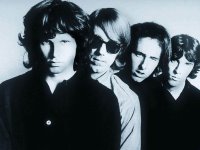
For example, about four years ago this writer was aware of a band called The Doors. Old group, Light My Fire, not interested, I thought. That was until I listened to their best of and in particular the live version of Roadhouse Blues. As soon as I heard Jim Morrison screaming the infamous lyrics: "I woke up this morning and got myself a beer, the future's uncertain and the end is always near", I instantly understood everything.

And that is the secret to why we fall in love with certain bands: Because somehow, their music, their lyrics, their artwork, their image, everything - it all adds up to the perfect explanation of how we feel at a certain point in time. That time is right now. And nothing can better articulate how we feel than a band that we love.


The Doors: So far ahead of their time that they're still cool.

Fast forward to the present and The Zutons with Tired of Hanging Around. Now, I quite liked You Will You Won't, the big single from their debut album Who Killed The Zutons, but I didn't really give them much thought other than that. However, when I heard their new single Why Won't You Give Me Your Love, something clicked inside of me. Principally the part of my brain where pleasure and excitement lives. I was excited, I knew that this was a band of rare quality and who promised much more.

The first listen of ...Hanging Around didn't disappoint. Everything in the title track confirmed what I'd already thought: That I had found a new musical love. Witness their lyrics: "These should be the best years of your life, but you worry all the goodness away". Yes, that is me. The perfect marriage of rolling drumbeats, sonic guitars and heartfelt lyrics, resulting in joy, pure joy!
The Zutons: Cheer up, we love you!

As per normal, I seem to have fallen upon a new love a bit too late, as their gig at The Junction has sold out (a similar thing happened with The Mighty Boosh). However, thank fuck for the modern miracle/car boot sale that is eBay.
How does it feel? It feels fucking great thanks, Zutons.

Monday, 20 February 2006

Assignment: Album review in the style of NME.com


Liam Howlett: All back to his.
Liam Prodigy: Back to Mine (Various Artists)

Prodigy main man makes a welcome return behind the decks mixing Public Enemy with Dolly Parton and pulling it off...just.

From the most eclectic compilation series around comes one of the most eclectic compilations to date. Liam Howlett, or Liam Prodigy (as in Liam is the Prodigy), is up there with Noel Gallagher and Damon Albarn as writing the soundtrack to the nineties. Think 'Out of Space', think 'Poison', think 'Firestarter': remember where you were when you first heard those songs.
It was the strength of those classics that led to a disappointing response from 2005's 'Always Outnumbered, Never Outgunned'. It was almost as if last October's greatest hits album 'Their Law: The Singles’ was released to make up for that disappointment. A new studio album is promised for late 2006 but in the meantime we are given another compilation, following 1999's 'Dirtchamber Sessions', to enjoy.

So, what is a party back at Liam's like? Well it ain't no chill-out to begin with. The album kicks off by launching into 'Wake the Fuck Up', a Prodigy, intro song if you've heard one. Then we are given a hint of the after-party's narcotics menu with Queens of the Stone Age drug anthem 'Feel Good Hit of the Summer'.

Just when you're thinking that this album isn't going to contain much substance, then he drops in Public Enemy's 'Welcome To The Terrodome'. Chuck-D's angry-yet-fluid rhymes give an insight into Liam's music attitudes: "When I get mad I put it down on a pad, give you something that you never had". 'I'm 5 Years Ahead Of My Time' provides further insight into Mr Howlett's undeniable self-confidence.

The middle of the album is a typical mash-up in the style of 'Dirtchamber Sessions', with everything from punk rock (Vatican DC) to country (Dolly Parton) and reggae (Max Romeo). 'I Chase The Devil' is one for the anoraks as it contains the sample for 'Out Of Space'.

The party gets back into full swing with acid house and hip-hop classics from Airport '89 and Norega respectively. 'Nothing' provides the climax of the album, as the compilation peters out slightly with the late seventies/early-80's rock of The Jam et all.

But the point of 'Back To Mine' is that unlike other compilations, the tracks are chosen by the artists solely as a reflection of their musical tastes and not to sell units. This may seem a little self-indulgent but it does provide an enjoyable insight into the tastes of the man behind some of the great singles of the last decade.

7/10

Tuesday, 14 February 2006

Assignment: Arctic Monkeys: The Future of the Music Industry?

Arctic Monkeys debut album Whatever People Say I Am, That’s What I’m Not recently became the fastest selling debut album in UK chart history, selling over 360,000 copies in its first week alone. However, the band’s huge fan base was not built up by clever marketing gimmicks; instead it arose almost by accident as a result of fans putting their 2003 demo CD on the Internet to download for free.

Whatever People Say… is widely available to download, for free through a file-sharing program (technically illegal), or paid for, through an on-line music store (legal). Major record labels such as EMI have argued that anyone downloading music for free is stealing from the artists. As CD sales have fallen over recent years and legal downloads have risen in their short lifetime, we could be forgiven for thinking that downloading is the future of music sales. But the band’s CD sales have ultimately come because of downloading, not despite it. So is the group’s success a one-off, or is it the future of the music industry?

What it shows is that the Internet can be used to promote a new band to an almost unlimited audience, which is certainly something that the major labels will be interested in. Meanwhile, high street music stores will be giving thanks for a small miracle: the album’s success could not have come at a better time than the difficult post-Christmas sales period. It is doubtful, however, that the band’s achievements will be equalled for a while.

They are the right band at the right time – the perfect antidote to X-Factor nobodies at a time when people are starting to realise the potential of the Internet. But the future, as nice as it sounds, is unlikely to be filled with new bands discovered by fans. Instead, things will return to how they were – bland, soulless singers ‘discovered’ by television shows will dominate the charts. We are at a musical peak right now, enjoy it while it lasts.